
German History
Overline
Restoring the Timeline:
The Historical Eras That Shaped Your German Ancestors
Your ancestors did not live in a vacuum. They were flesh and blood individuals whose hardest choices, sudden migrations, and daily struggles were entirely dictated by the turbulent tides of European history. To truly understand their lives, you must look beyond mere names and dates on a chart. You must step into the turbulent eras
they endured.
From the devastating fields of the Thirty Years’ War and the strict social hierarchies of the Holy Roman Empire, to the massive industrial shifts of the 19th century and the geopolitical fracturing of the German Empire – every historical event left a permanent mark on your family’s unique journey.
Understanding the historical context is not a casual hobby – it is the ultimate weapon to breaking through stubborn genealogical brick walls. Major historical shifts, changing borders, and local legal revolutions entirely dictated how, where, and why records were kept. A sudden gap in a parish registry or the unexpected relocation of a family is almost always explained by a historical event, a local harvest failure, or a regional military conflict.
Explore our curated historical chronicle below. Here, we dismantle popular historical myths and reconstruct the factual realities of German history with strict scientific discipline – providing you with the essential microhistorical context needed to breathe life into your Prussian, Bavarian, or Saxon roots.
Ready to uncover your family’s full story?
Discover how our tailored genealogical research goes beyond textbook history, transforming the grand events of the past into a beautifully curated chronicle of your German ancestors.

Part 3:
Myth and Fact in Witch Trials
25.10.2026
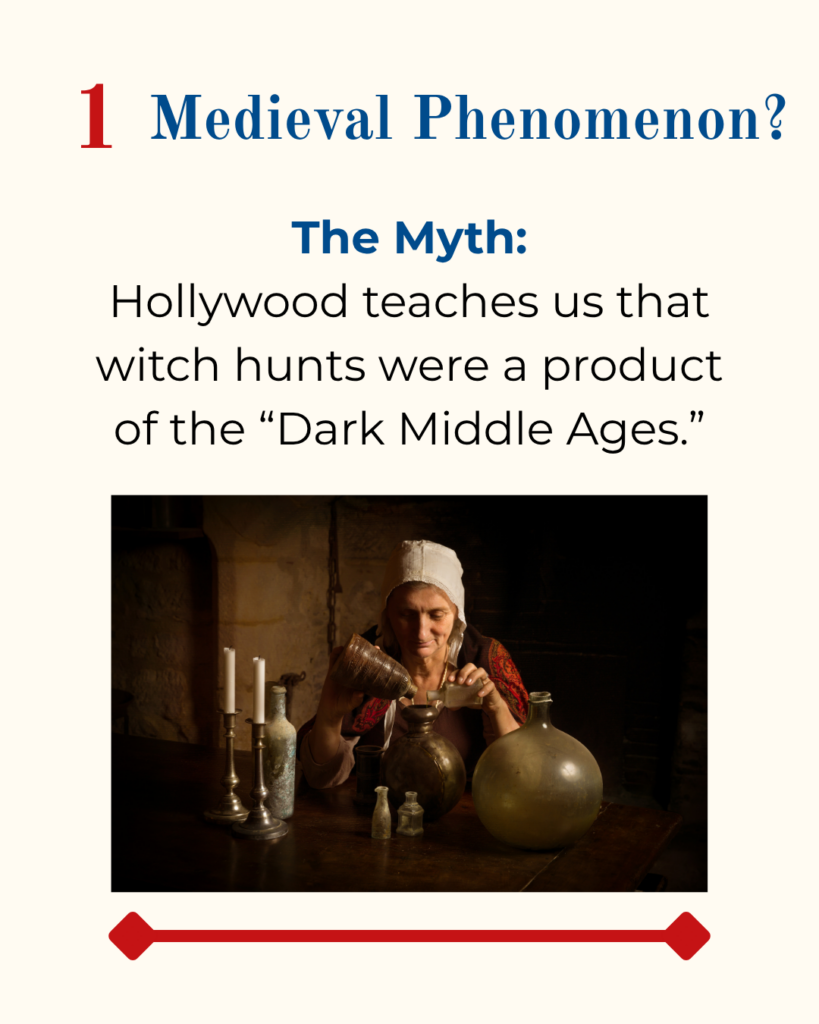
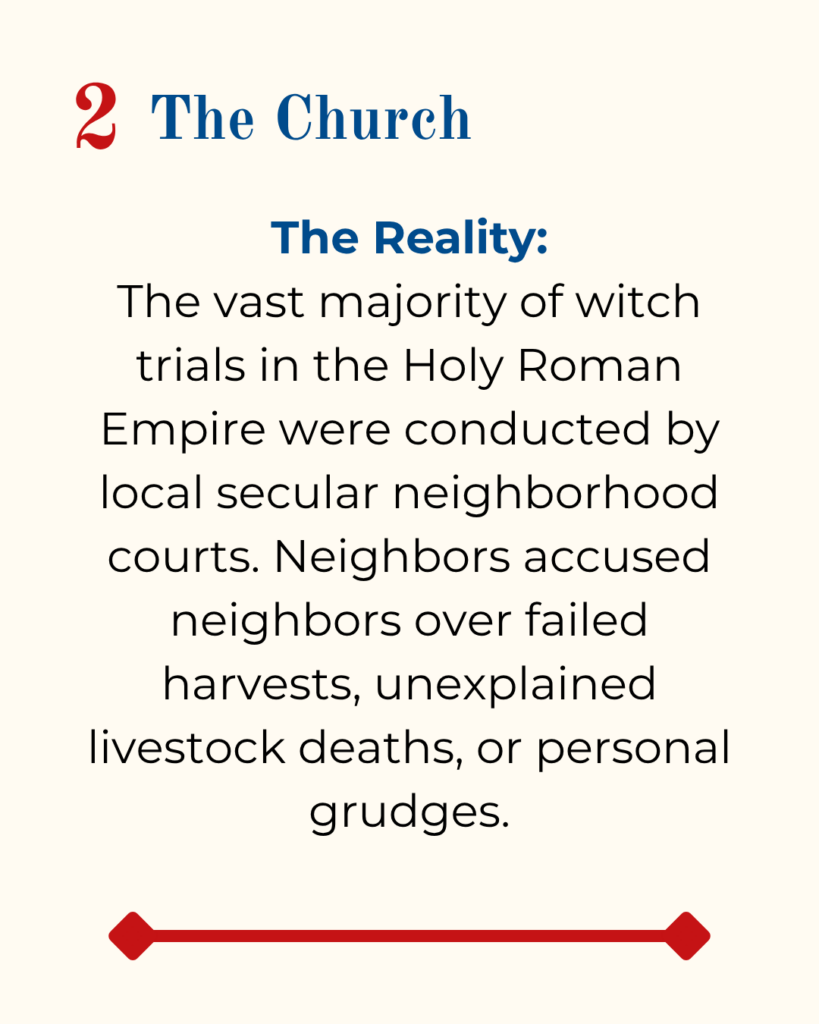
Think witch trials were just a dark medieval fantasy? Historical evidence tells a completely different story. When researching your German family tree, stumbling upon the late sixteenth or early seventeenth century can reveal gripping and sometimes tragic ancestral biographies. Unfortunately, Hollywood productions and unverified internet rumors have heavily distorted what actually happened on German soil.
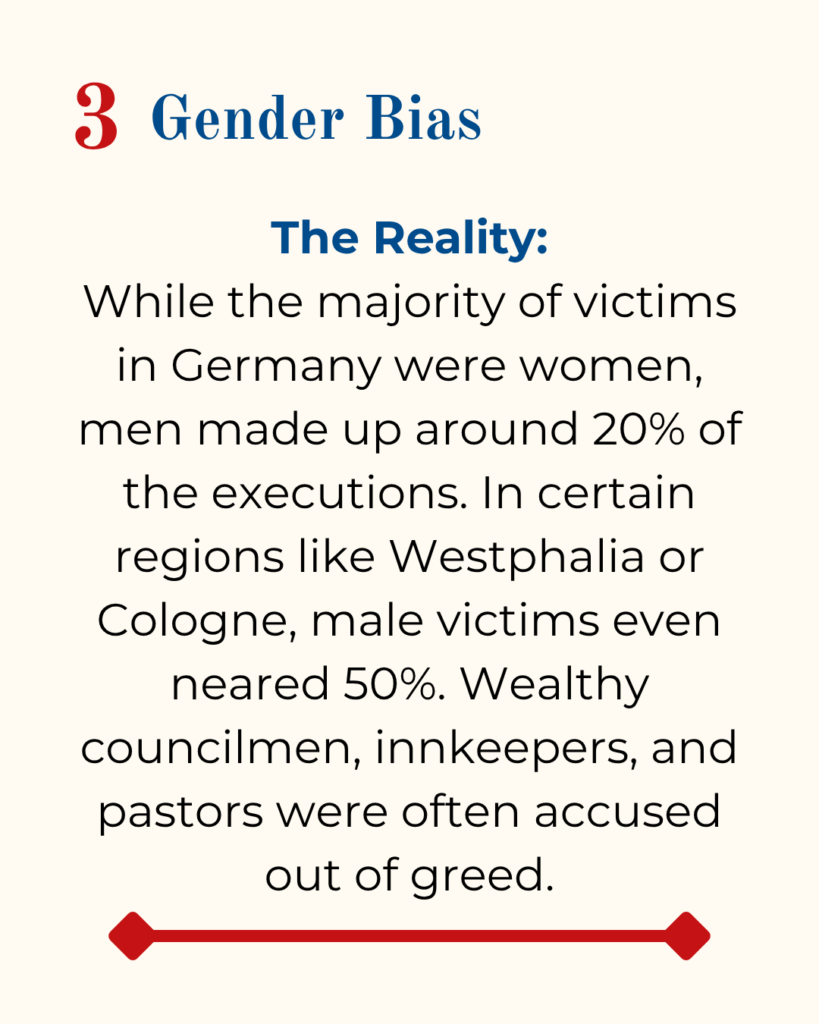
To conduct credible genealogical research, family historians must separate historical myths from the documented reality of the Holy Roman Empire. The structural framework of these historic trials directly impacts how you navigate ancestral records today.
Key Historical Realities for Family Historians:
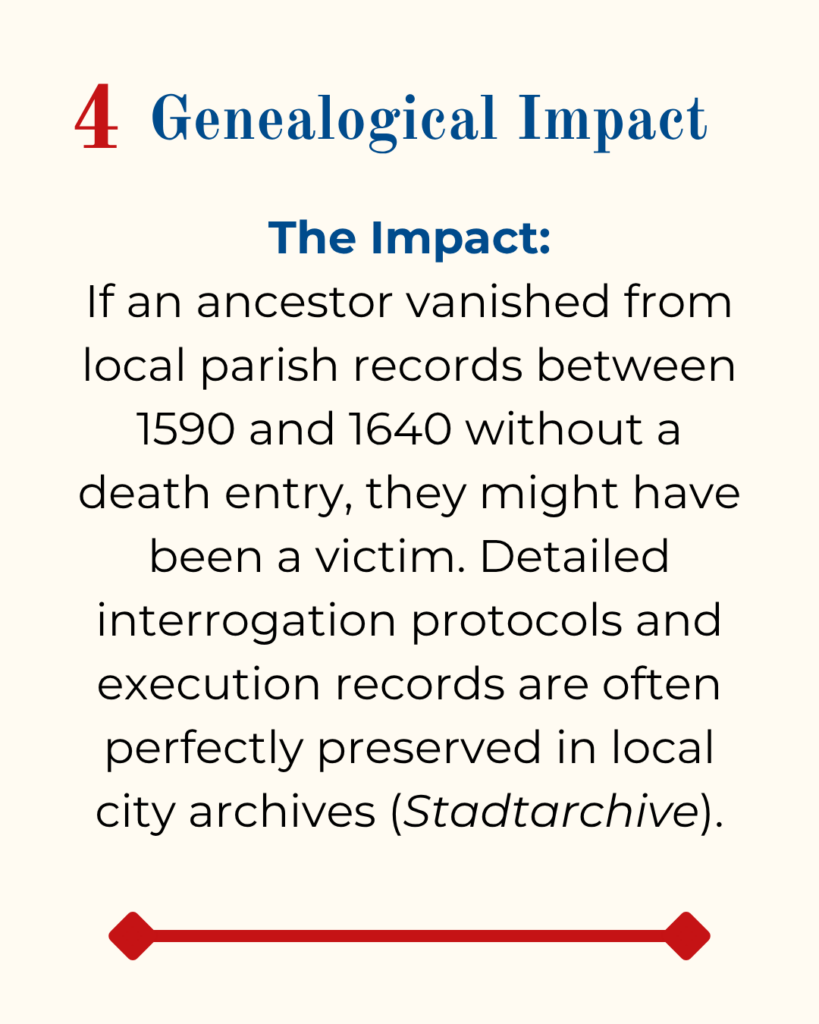
The Critical Impact on Your Genealogy Research:
If one of your German ancestors suddenly and inexplicably vanished from local parish church records between 1590 and 1640 without a formal burial entry, do not assume the lineage has hit an impenetrable brick wall. Because these trials were legally structured bureaucratic processes, highly detailed interrogation protocols, witness testimonies, and criminal court records might still be perfectly preserved. These valuable primary sources are usually hidden within specialized local city archives (Stadtarchive) or regional state repositories, waiting to be systematically uncovered with scientific precision.
Part 2:
The Missing Days of 1582
06.10.2026
The Year 10 Days Vanished from History…
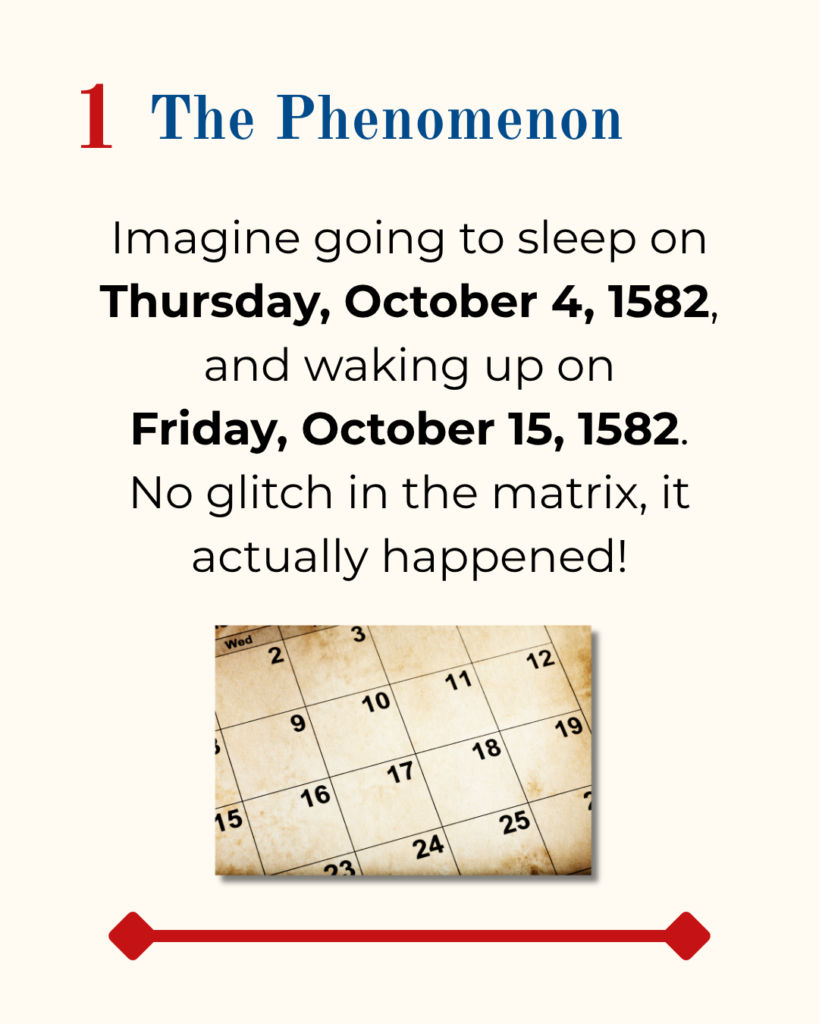
Imagine going to sleep on Thursday, October 4, 1582, and waking up the next morning on Friday, October 15, 1582. No glitch in the matrix – it actually happened!
But why did ten full days completely vanish from human history? The old Julian Calendar miscalculated the solar year by 11 minutes annually. By 1582, this tiny mathematical error had snowballed into a massive 10-day drift, shifting crucial Christian holidays like Easter further into the year. To permanently fix this issue, Pope Gregory XIII introduced the Gregorian Calendar and simply deleted the delta.
The Historical German Calendar Trap:
Because the Holy Roman Empire was split into countless sovereign micro-states, a massive administrative chaos unfolded across the German lands:
The Critical Impact on Your Genealogy Research:
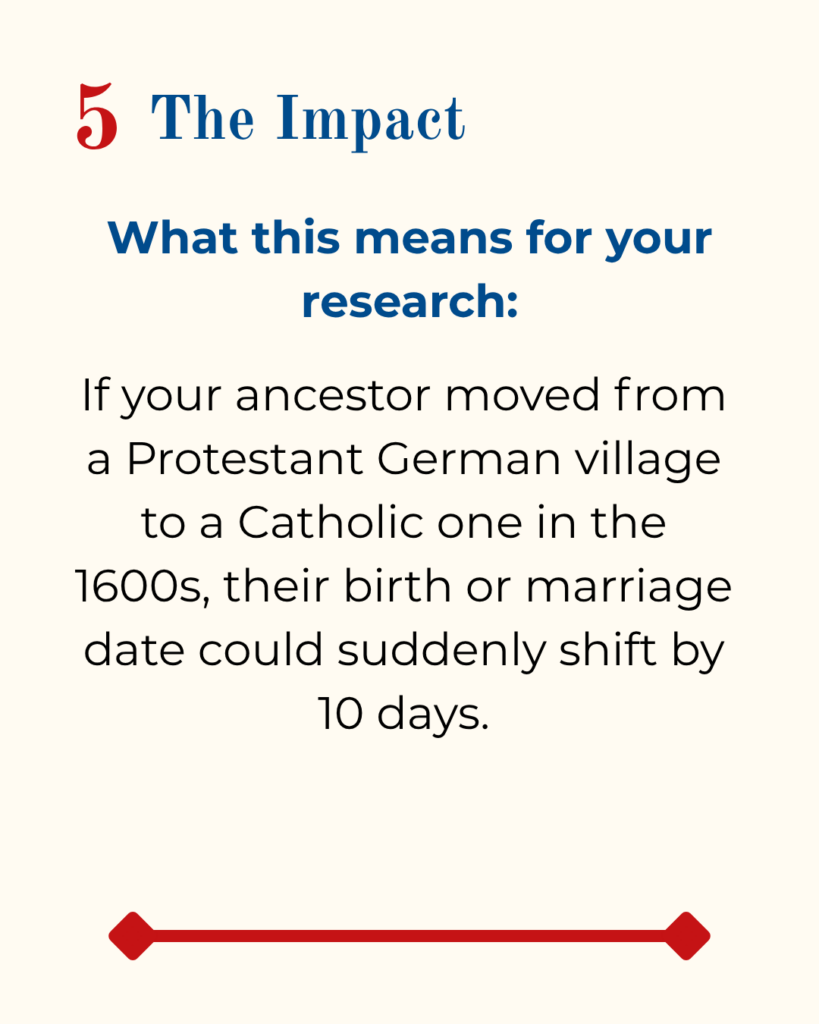
If your German ancestors moved from a Protestant village to a nearby Catholic parish in the 1600s, their documented birth, marriage, or death dates could suddenly shift by 10 days. Without understanding this calendar barrier, amateur family historians easily misalign chronological data and build their family trees on false assumptions.


Part 1:
The Summer They Left Germany ⠀
08.09.2026
Was Hamburg the last place your ancestors saw?
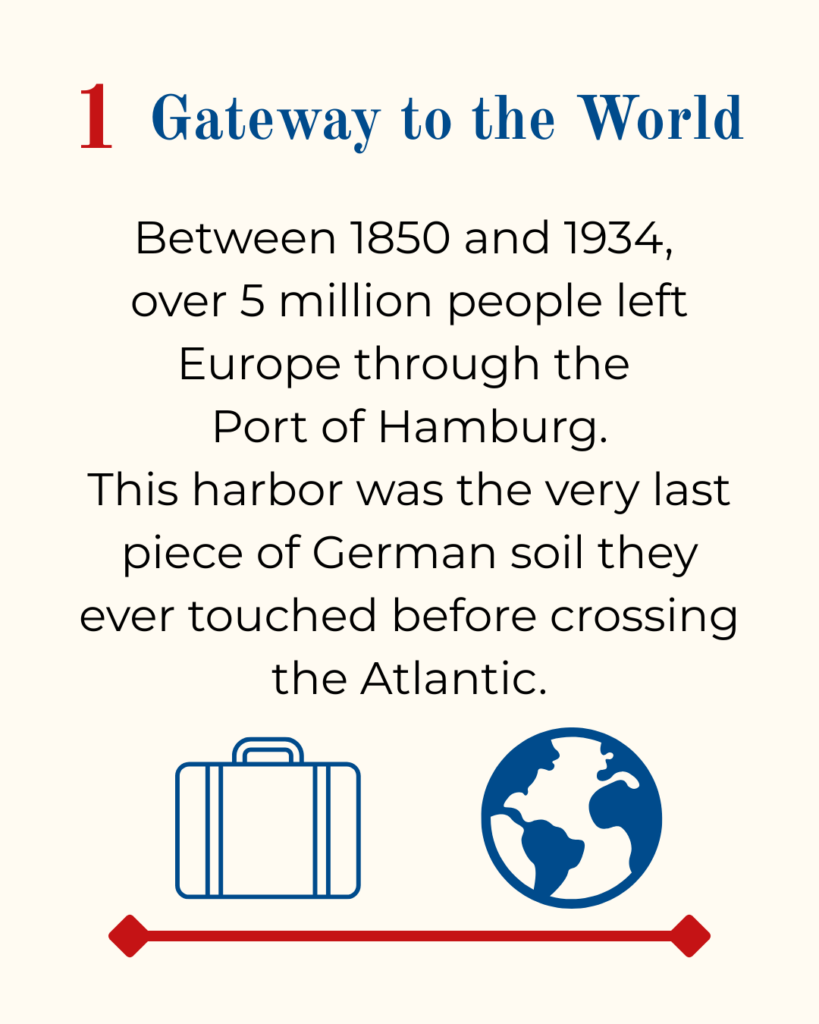
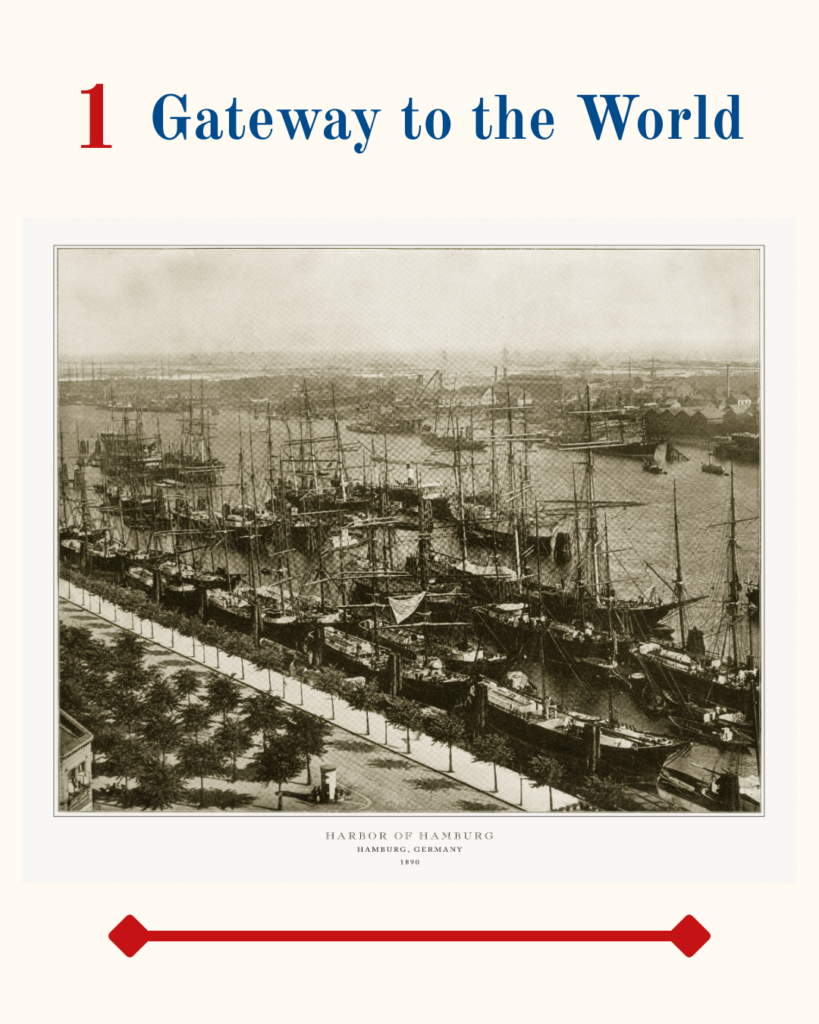
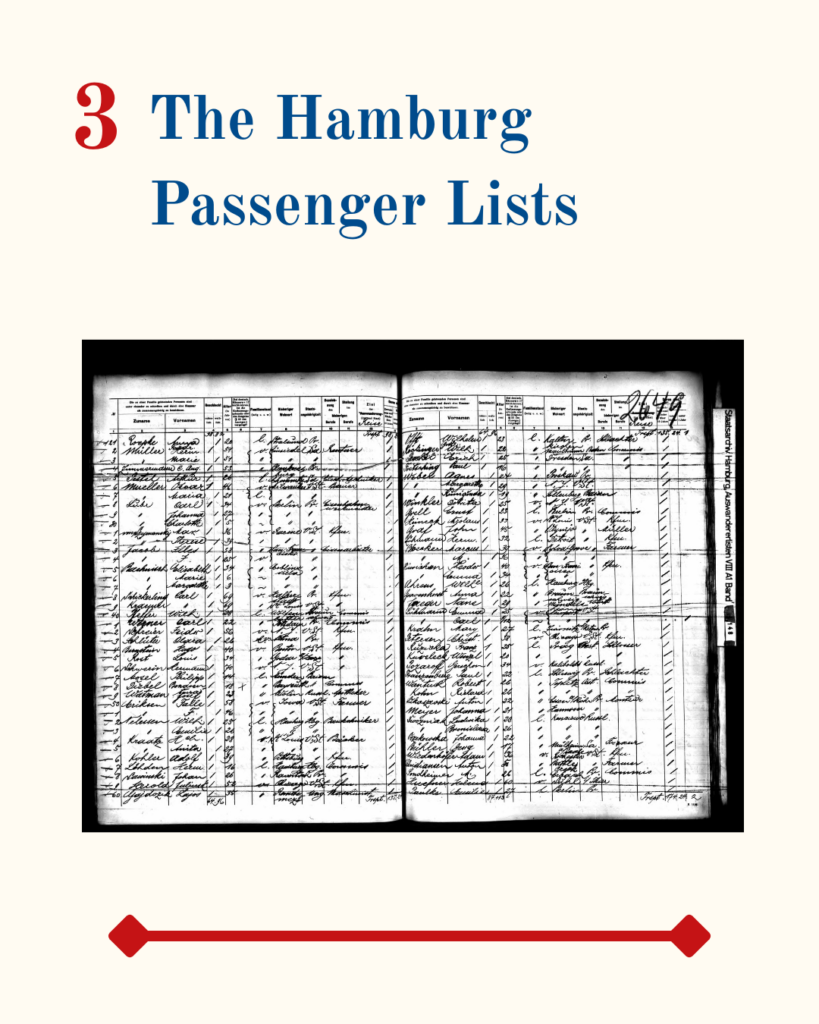
Between 1850 and 1934, the Port of Hamburg was the “Gateway to the World” for over 5 million people. For many of our ancestors, standing on those crowded docks was the exact moment they said their final goodbyes to Europe before boarding a ship across the Atlantic.
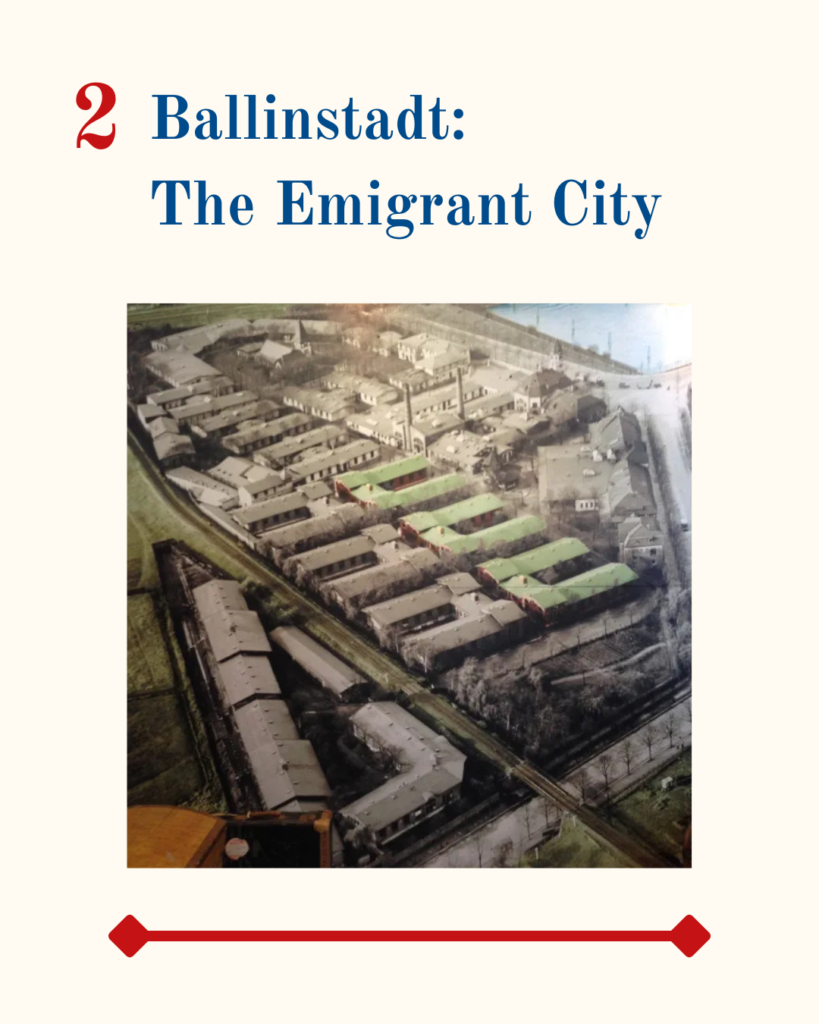
But before they could even step onto a vessel, they had to survive “Ballinstadt” – a massive emigrant city within Hamburg built to handle the sheer volume of travelers. Built from 1901 onwards under HAPAG General Director Albert Ballin, this state-of-the-art complex featured custom halls, specialized dining facilities, on-site doctors, and even dedicated churches and a synagogue to keep travelers safe, sanitized, and “ready for transport.” Imagine the mix of hope, anxiety, and exhaustion in those crowded waiting halls!
The Good News for Genealogy:
Unlike many other European ports where records were tragically lost or destroyed, Hamburg kept meticulous records. The famous “Passagierlisten” (Passenger Lists) still exist today. They are an absolute goldmine, frequently revealing:
The Catch:
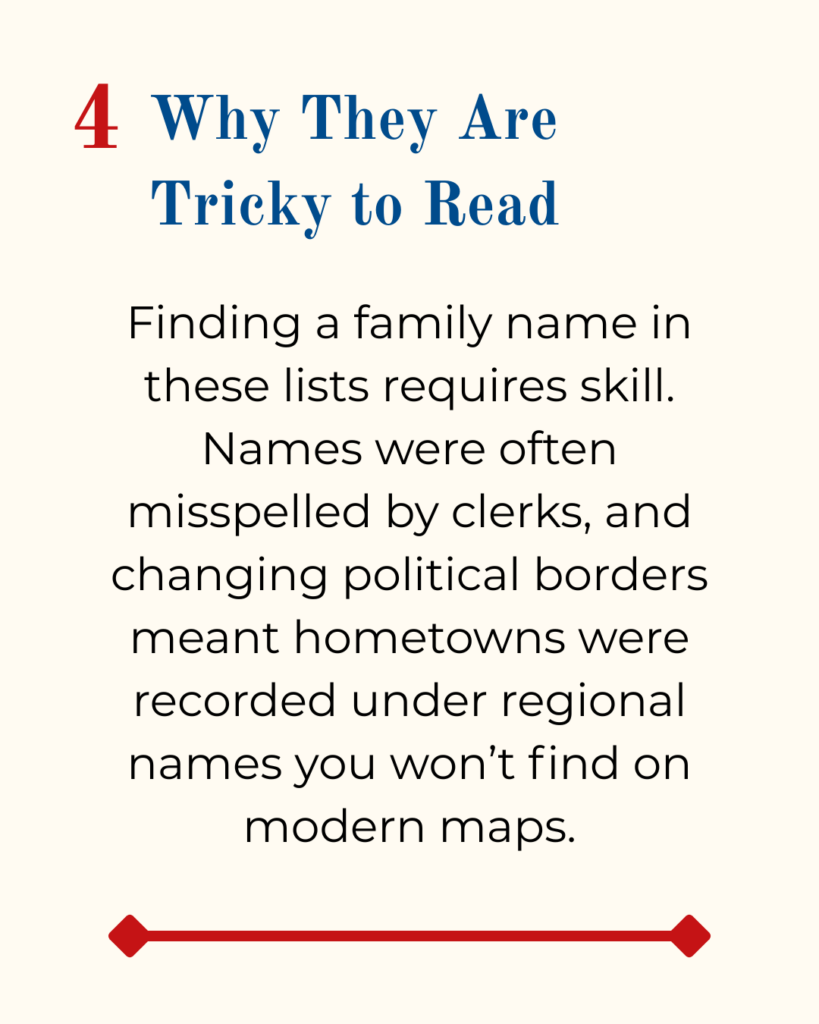
Finding your family in these handwritten files isn’t always easy. Old borders shifted constantly, meanings changed, and clerks often misspelled surnames based on how they sounded.